Chapter 15
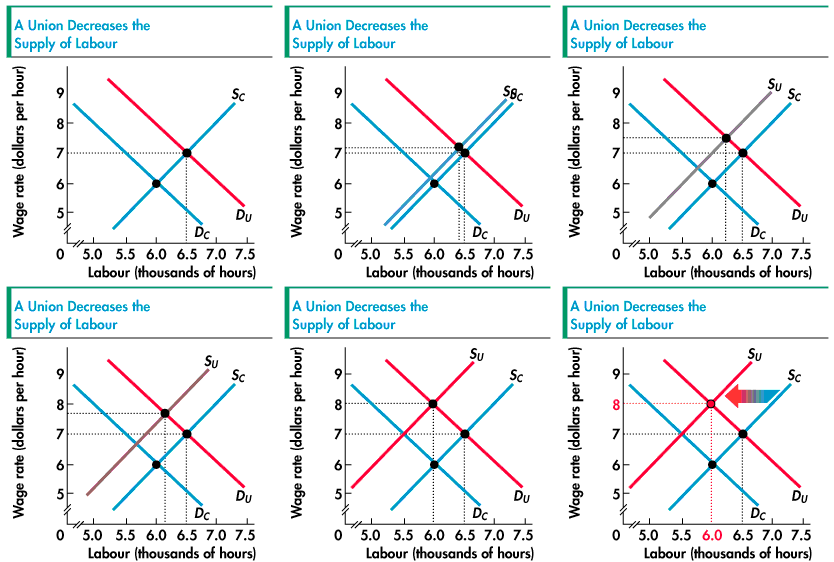
In addition to increasing the demand for their members' labour, unions also attempt to restrict the supply of labour. If a union can restrict the supply of labour in a market so that only union members qualify for employment, the labour supply curve shifts leftward. Then, as shown in the figure, the equilibrium wage rate increases (to $8) though the level of employment decreases (to 6,000). Thus although a restriction on the supply of labour does not necessarily increase union members' employment, it does raise their wage rate. And, to the extent that non-union labour experiences most of the decrease in the supply of labour, the employment of union members might not decrease by much.

The effect of unions in a competitive labour market is (another!) example of the power of the supply and demand model. At this time in your course, you should already have a good command of the supply and demand model. To check quickly your ability to work with the supply and demand model, use the Study Guide to accompany the textbook. Work True orFalse questions 6 to 11; Multiple Choice questions 4 to 6, and Short Answer questions 2 and 3. Be sure not to miss any of these questions. If you miss any of these questions, review the material in Chapter 15 and in Chapters 4 and 7.
Would you like to study another chapter