Chapter 15
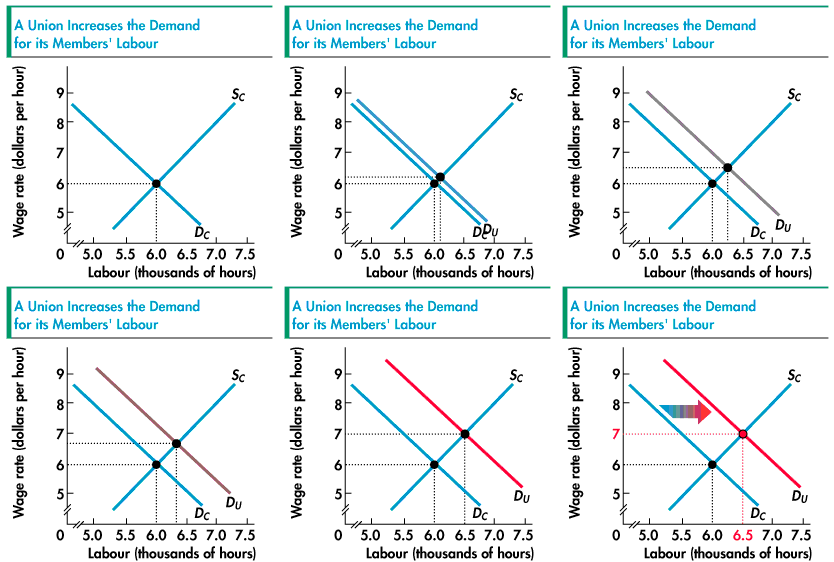
One thing that unions often do is to support policies that increase the demand for their workers' labour. The figure shows what happens if the demand for union labour increases. As the figure shows, the increase in demand for labour results in a higher equilibrium wage rate ($7 in the figure) and a higher equilibrium level of employment (6,500 hours in the figure). Hence if the demand for union labour increases, unions can achieve both higher wage rates and higher levels of employment.
What sorts of policies do unions support to increase the demand for their members' labour? The policies are discussed on pages 15.6-15.7 of the textbook. Briefly, some of the policies include:
- Increase the marginal product of union members (A firm's demand curve for labour is the marginal revenue product curve for labour, MRP. An increase in the marginal product of labour directly increases the demand for labour.)
- Increase the demand for the product being produced (By increasing the demand for the final product, the marginal revenue product of labour increases, thereby increasing the demand for labour.)
- Encourage import restrictions (Restricting imports can increase the demand for the products produced in Australia by union labour. Similar to the previous effect, the increase in the demand for union-produced products increases the demand for union labour.)
- Support minimum wage laws (An increase in the minimum wage raises the cost of a substitute for union labour, namely low-skilled labour. As a result, firms substitute towards union labour, thereby increasing the demand for union labour.)
- Support immigration restrictions (Immigrants are often substitutes for union labour, so restricting the supply of immigrants raises the wages paid immigrants. Then, as with the previous factor, firms substitute union labour for immigrant labour, thus increasing the demand for union labour.)
Even though the increase in demand resulted in a higher wage rate, the new wage rate, $7 an hour, may be less than the wage rate the union wishes to achieve. It might be impossible to achieve the target wage rate by only increasing the demand for union labour. So, we come to the other half of unions' answer to the problem outlined on the first page. Click on the figure below to see the other half of the answer.